Kenya’s Amboseli National Park, located in the savannah grasslands beneath Mount Kilimanjaro, earns world renown for its elephants. It’s one of the few places that’s remained relatively undisturbed by population growth and loss of wildlife habitat. Credit for that goes to tourism, researchers, and the local Maasai people.
The park and surrounding Maasai tribal lands double as a migration path for the elephants. Here it’s possible to see elephants from newborns to bull males in their 40s and 50s. Unfortunately poaching, both for meat and ivory tusks, remains a problem.
The effort to keep the mammoth mammals safe from poachers is continued at Satao Elerai, a tented safari camp located on a private, 5,000-acre conservancy about 10 kilometers outside the park. Tent is an understatement. Mine has canvas walls, yes, but also a full bed, a wood floor, and a shower bath.
Satao Elerai is located on the critical Kitenden Corrider linking the Kilimanjaro Forest Reserve in Tanzania with Amboseli National Park and beyond, says Wilfred Ngonze. He manages the Maasai-owned conservancy as well as a neighboring one. I’m chatting with him over tea in the main lodge, while more than a dozen elephants cavort in the watering hole outside the window.
“We have a protection team of 12 rangers, and we have a population of more than 100 elephants at any given time,” Ngonze says. “We have observation points and patrols, and when we catch a poacher, we prosecute.”
Instability in neighboring Somalia and southern Sudan coupled with sport hunting in adjacent Tanzania contribute to the poaching problem, according to Ngonze. “In Kenya, we only shoot with a camera,” he quips.
Poaching isn’t the only challenge to managing the conservancy, Ngonzo says. Watering holes are few, and the local Maasai, their livestock, and wildlife share them.
Not so the mud bath outside the lodge window. That one is reserved for elephants and other wildlife. Guests can cool off in the pool, sip cocktails, or dine while watching elephants belly up to the bar. And even better, rates help support the conservancy efforts.
On daily game drives, it’s easy to view elephants of all ages up close, along with giraffes, baboons, hippos, zebras, wildebeests, ostriches, warthogs, and other wildlife.
The sightings far exceeded my expectations. Still, my favorites were the elephants viewed from from my doorstep.
While gadding about Great Britain by rail (especially easy with a BritRail pass) a few years ago, I stumbled into the delightful Forsyth’s Tea Room, while exploring Chalmers Close, one of the many inviting alleys that radiate off Edinborough, Scotland’s, Royal Mile.
The entire shop looked like a Hollywood set, and Christine, the proprietor, was right out of central casting. I ordered, then took a seat and checked out the surroundings: stone walls, tablecloths, tea cozies and tea towels and mugs for decor. Forsyth’s tea room was equally cozy and comforting. I settled for a Scotch pie, a meat-filled, seasoned pastry , tea, and, of course, shortbread.
I attained enlightenment in County Antrim, Northern Ireland. Not the lights-flashing, God-appearing, Hallelujah! type of enlightenment, but rather a far-more-subtle, restorative, all’s-right-with-the-world kind. This enlightenment hit me not while clambering over the Giants Causeway, not while swigging a dram of whiskey at Bushmills, nor while white-knuckling my way across the tightrope known as the Carrick-A-Reed rope bridge. No, I found it in forested glens, along cascading waterfalls, on windswept headlands, and on a remote island.
Not that I came to Northern Ireland looking for enlightenment or even spiritual renewal. I came with my husband and father to noodle the highways and byways, explore the castles and ruins, and soak up the Irish craic or good times along with a pint of Smitty’s or Guinness. Sure, I had a laundry list of must-sees and must-dos, but as soon as I arrived in the Glens of Antrim, I tossed it aside and let serendipity rule.
Forested glens & tumbling rivers along the Antrim Coast
Legend and lore permeate the Glens, glacier-sculpted valleys of woodlands and grasslands, peat bogs and beaches, and cliff-edged mountains and rock-bound headlands stretching over 50 miles of County Antrim’s coastline. Wee fairy folk allegedly reside in woodland caves and coastal crags. Rural byways are peppered with ancient ruins and historic sites. Listen closely, and it’s almost possible to imagine hearing long-ago battles amidst the peaceful quiet disrupted only by bleating sheep and bellowing cows.
Tea drew me to Glenarm Castle, in Glenarm, one of Northern Ireland’s oldest estates. It’s been home to the McDonnell family, Earls of Antrim, since the 17th century. The castle isn’t regularly open to the public (only on select dates), but the tearoom and the walled garden are. We detoured off the main road for tea and scones but couldn’t resist exploring the garden, which dates to the 18th century. The bright colors of blossoming spring bulbs and fruit trees appeared as if fairy folk had engaged in a paintball match.
Continuing north, the splendidly scenic Antrim Coast Road squeezes through the Red Arch, a landmark tunnel through a headland cut in 1817, before arriving in Glenariff, Queen of the Glens. It would be hard to imagine a finer place to absorb this queen’s beauty than Dieskirt Farm Bed and Breakfast, James and Ann McHenry’s 350-acre working sheep farm.
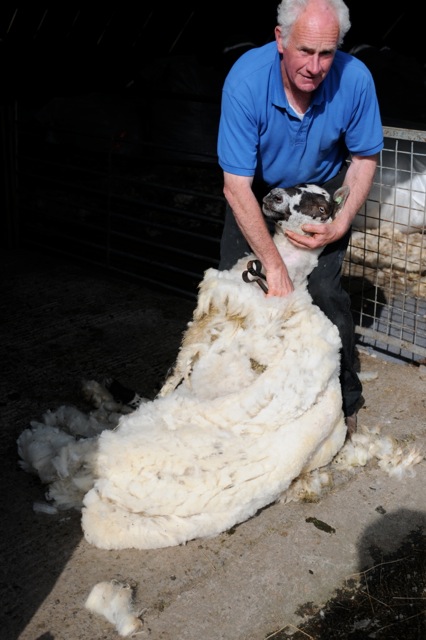
Dieskirt Farms sits high in the glen, offering glimpses of the distant sea over sheep-manicured lawns dotted with lambs and a corralled horse and donkeys. I loved this simple place, with its generous breakfasts and congenial hosts. James even invited us to watch him hand-shear a sheep.
Out the B&B’s backdoor, Glenariff Forest Park beckoned. The Glenariff and Inver rivers tumble through dense, century-old oak, ash, willow, and hazel trees in this waterfall-rich woodland. Light filtered through the canopy, dancing off the rushing waters and illuminating pools as I moseyed. Trails edge the flows, crossing bridges over gurgling stepped falls and passing through mossy-walled gorges, where plunging cascades mist the air with the damp, strangely life-affirming scent of winter decay blended with spring renewal.
We walked and wandered, hoofed up Glenariff Mountain, and refueled each evening at Laragh Lodge, a comfortable restaurant tucked in the crag at the head of the glen.
While the glens whisper their appeal, the coast shouts, with iconic sights that demand attention, such as the Carrick-A-Rede Rope Bridge. Originally used by salmon fishermen to access their nets, the rope-and-slat bridge spans a 66-feet-wide, 75-feet-deep chasm separating Carrick Island from the mainland. Crossing the bridge isn’t for the faint of heart or fearful of heights, but even so, there’s nearly always a line, in part because almost everyone stops midway across for photos. Since no one regulates the one-way flow, you can wait a while before the tide of human foot traffic reverses its flow. Touristy, yes, but I enjoyed the wobbly, fun-house-like crossing and my brief wander around the island.
I wish I could be equally enthusiastic about the Giant’s Causeway. Every guidebook, brochure, and magazine highlighting this region points to this icon as a must-see attraction. The name is appropriate, given this causeway of polygonal basalt columns truly appears as if placed for a giant to happen along and climb up and out of the frigid blue seas that lap aggressively at their base. Legend has it that Irish giant Finn McCool built it so he could walk across the ocean to battle Scottish giant Benandonnier.
Now a UNESCO World Heritage Site maintained by the National Trust, the Giant’s Causeway is being loved to death. Maybe years ago, this was a marvel to stumble upon before the hype and the tour buses, the visitor center, and the endless parking lots. Instead, we found it extremely crowded, and the only thing that broke through the commercial chatter was spying a lone bagpiper playing out on a point. This was, without question, the low point of our Antrim Coast visit. I suspect that had we visited first thing in the morning or had the time to hike the two-mile Runkerry Head trail; we might have had a better experience.
Dunluce Castle, Antrim Coast
We could have drowned our experiences in Bushmills, which has distilled whiskey for over 400 years. Instead, we opted to drink in the views from Dunlace Castle, a spectacularly romantic ruin topping a cliff just west of town.
Although there’s evidence that the castle dates back to the 14th century, the existing drawbridge-accessed ruins are late medieval and 17th-century constructions. No matter, this stunning ruin becomes all the more impressive when prowling around inside and realizing its immensity.
Rathlin Island off Northern Ireland’s Antrim Coast
My penchant for going off the beaten track demanded we visit Rathlin Island, Northern Ireland’s most northerly outpost. I’d first heard Rathin’s Siren song when we’d taken a spin out to Torr Head, a smashingly scenic headland with views to both Rathlin and Scotland’s Mull of Kintyre. Way back in 1306, Robert the Bruce took refuge on Rathlin when driven from Scotland by England’s Edward I. Legend has it that, inspired by watching a spider succeed after trying repeatedly try to bridge a hole in its web, he gathered new forces and returned home to fight for his kingdom.
These days, Rathlin is best known as the site of Northern Ireland’s biggest seabird colony, with a center maintained by the Royal Society for the Protection of Birds. Getting to it requires ferrying 6 miles across the Sea of Moyle from the market town of Ballycastle.
The Puffin Bus meets the ferry, carrying those who don’t have the time or inclination to walk the 4 miles to the center, based at an upside-down lighthouse on the island’s western tip. The one-lane road snakes over the mostly tree-barren island, soaring to heights with head-swiveling views, descending to valleys, and eventually arriving at a lofty headland, from which a marked path zigzagged down toward the lighthouse before giving way to 89 (count ’em) steps to the viewing deck.
The cacophony of bird cries fills the air as tens of thousands of seabirds—fulmars, guillemots, kittiwakes, puffins, and razorbill—perform avian antics, flitting, fishing, and nesting around the cliffs and stacks. When we finally departed, I promised myself I’d return, book a room at the Manor House, an 18th-century Georgian-style inn on the harbor, and spend a few days hiking the trails. I want to immerse myself in this wild and remote paradise that gave me a lightened sense of renewal as clear and pure as the ocean-cleansed air.
If you go:
Northern Ireland uses British sterling (GBP) as its currency.
Where: Gaststrube Pürstner, Vienna, Austria; operated by the Purstner family for three generations.
Menu: Traditional, prices from 9-26 Euros (most in the 15-18 E range)
Dish: Spinatnockerl (Spinach spätzle with ham and blue cheese), came with a side salad for 8.60 Euros. Portion was huge.
Why: I asked the concierge at the Palais Hansen Kempinski for a recommendation for a low-key, traditional, comfort-food experience with reasonable prices.
Setting: A warren of intimate rooms, each with a different character. I dined in the Cask Room, accented by tables set in in wine casts along with traditional artwork, including hand-painted murals. Other rooms featured ceiling paintings, wood carvings, and other folk art. Waiters in lederhosen, of course.
Bottom line: Perfect! I’m still thinking fondly of this dish and trying to replicate it at home. Service was punctual–not warm and fuzzy, but efficient and friendly. I’d return again, and I’d order this again (although there were plenty of other enticing options on the menu).
Maine has an official art museum trail, a maritime heritage trail, an architecture trail, even a garden and landscape trail. It doesn’t have a chocolate trail, but it should. So, I created the Maine Coast Chocolate Trail based on the must-stop chocolate shops salting the coast from Kittery to Lubec.
These aren’t kid-in-a-candy-store chocolates; they’re more like adult soft porn: luscious, decadent, sinful and capable of producing audible moans when tasted
Yes, there are more mainstream chocolate shops—Len Libby’s, in Scarborough; Haven’s in Portland; Wilbur’s in Freeport come to mind—but my Maine Coast Chocolate Trail comprises artisan shops selling hand-crafted truffles, bark, and bonbons. These aren’t kid-in-a-candy-store chocolates; they’re more like adult soft porn: luscious, decadent, sinful and capable of producing audible moans when tasted.
Now here’s the best part, thanks to mail order, even armchair travelers can indulge. One piece of advice: Call before making a special trip.
Post updated Feb. 2, 2020
Byrne & Carlson’s chocolate bars give meaning to the term eye candy.
Ellen Byrne and Christopher Carlson don’t make just chocolate bars, they create works of art that are almost too pretty to eat. Some have flowers, leaves, or fruit embedded in them. And the flavors match the creativity. The pansy bar, made with Belgian dark chocolate, looks as if the crystallized pansy and mint leaves are actually growing in the chocolate. But these chocolates aren’t simply eye candy, they’re also delicious. And the flavors, such as chipotle sea salt, adds zing to classics.
Sandra and Kevin Freeman’s heavenly scented shop sells the usuals, such as peanut butter cups, truffles and turtles, but Sandra, the chocolatier, likes to play with flavors. That results in new twists on familiar items, such as barks made with blueberry, peppermint, and a cranberry pistachio, made with freshly shucked nuts. And everything is made with Belgian chocolate. Yum.
Harbor Candies, a stop on my Maine Coast Chocolate Trail, offers an almost overwhelming variety of chocolates.
The enticing aromas emanating from Harbor Candy Shop will lure any passing chocoholic inside. Skip the mainstream offerings and head to the specialty truffles and other goodies made fresh on site. The sandwich pralines are exquisite. Or, how about caramallows, which combine fresh, made-on-the-premises caramel with marshmallow and dark chocolate? Even vegans can rejoice, with raspberry crème baskets, made using soy milk and available in dark chocolate, rice milk chocolate and dark chocolate raspberry, and plentiful other no-guilt vegan choices, including truffles, peanut butter cups, bark, and chocolate-covered fruits. Oh my!
Portland is nationally renowned as a foodie town, and it does have a couple of chocolate shops. But ,for true chocoholics, nothing but truffles from Dean’sSweets will do. Dean Bingham, an architect, creates his hand-dipped dark chocolate works of art in small batches. Daily selection is ruled by serendipity and whim; tequila-lime, single-malt scotch, cayenne are just a few possibilities. Or try his Maine-accented assortment of four flavors all associated with Maine: maple, blueberry, raspberry, and his take on the classic needham, made not with mashed potatoes, but with Cold River Vodka. All are nut free; a real plus for those with allergies. Don’t miss the salt caramel, and do try the bacon-butter crunch (okay, maybe not). Dean’s has two shops in Portland.
A heart-shaped box of decadent goodness from Ragged Mountain Chocolates (which changed its name in 2020 from Black Dinah Chocolatiers)
Kate and Steve Shaffer use fresh local cream and, when possible, locally harvested organic herbs and fruits to flavor their hand-crafted truffles. “It’s not about milk or dark, it’s about flavor,” Steve says, when asked about the intriguing blends. Try the chocolate gingerbread, which really does evoke the fragrant dessert, or the sexy Mexi, a milk chocolate truffle flavored with whole ancho chiles, vanilla, canela (Mexican cinnamon), and cardamom. “The lavender changed my life,” one happy customer told Steve. Ragged Coast, which originated as Black Dinah Chocolatiers on Isle au Haut, now produces its chocolates in Westbrook, where it has a shop. A second location is in downtown Portland.
Melinda Richter’s dark chocolate-enrobed peanut brittle is reason enough to wind down Route 24 from Cooks Corner in Brunswick to The Island Candy Company. The Atlantic shimmers behind the shop, and colorful perennials fill a memorial garden in front of it. Inside, chocolates fill multiple cases, and many are made with her caramel. The turtles rival the peanut brittle, and her toffees and barks, especially the pistachio, are heavenly. You might even catch Melinda making chocolates when you visit.
Find Safe Harbor Confections at Gifts at 136 in downtown Damariscotta as well as at other shops.
Look for bars and truffles from Safe Harbor Confections in specialty shops from Kittery to Milbridge and inland to Fryeburg. These chocolates not only taste delicious, but also help animals in need. A percentage of profits as well as products are donated to animal welfare organizations nationwide. I think the merlot sea salt dark chocolate bar might be the healthiest chocolate, ever. All of the ingredients are frequently cited in healthful food updates: dark chocolate, red wine, sea salt. What’s not to love? Safe Harbor’s retail shop is Gifts at 136, in downtown Damariscotta. Here, you can purchase Safe Harbor’s chocolates as well as a well-curated selection of Maine-made art and fine and folk craft, with choices in all price ranges. Don’t miss it.
Yes, Ben & Bill’s, in downtown Bar Harbor, on Mount Desert Island, is a sibling of Massachusetts-based shops, but that doesn’t make it any less a delicious stop. I’m a huge fan of the dark chocolate-covered pretzels, and my husband thinks the peanut butter cups here are superb. But, what distinguishes this shop is that it not only makes chocolates and candies, but also ice creams; better yet, many of the homemade ice creams are flavored with the homemade candies.
Oh my! Monica Elliott draws on her Peruvian background to create amazing chocolates—rich, decadent, delicious. If she’s around, she’ll guide you through the flavors and a tasting, making it the perfect last stop on the Maine Coast Chocolate Tour. Don’t be surprised if you depart spending far more than you planned—these are just too hard to resist. Now the bonbons flavored with the Peruvian filling are beyond memorable and available in almond, apricot, plum, coconut, walnut, and pecan, all wrapped in bittersweet chocolate. But, don’t stop there. Try the sea cucumbers, made with chocolate, caramel and peanut butter; the pistachio creams; bourbon-with-pecan truffles; and the beyond decadent sea urchins, made with bittersweet chocolate, caramel, toffee, Peruvian filling, and pecans. And, well, you get the point. Oh, and Monica’s thick, ultra-rich hot chocolate is definitely worth the splurge.
It’s easy to find Barry Colpitts’s home gallery in East Ship Harbor, Nova Scotia. Folk art adorns the house, lawn, barn, shed, fence, car, and even the mailbox and truck. Hand-carved, two- and three-dimensional birds and fish, saints and sinners, mermaids and fishermen, augment every available surface. Works of art, all painted in bold colors using shiny boat paint, adorn shutters, trim, railings, and newel posts.
“Bright colors make me feel good. Nothing else looks right,” Colpitts says. Even on a dreary day, it’s a smile-producing sight.
Colpitts’ religious convictions are evident in his use of angels and crosses and his whimsical interpretation of the seven deadly sins: yelling all the time, wanting other people’s stuff, eating too frigging much, looking too hard at someone else’s wife.
Even the oxen on his small farm are blessed with yokes accented with religious icons. “They need all the help they can get,” he quips.
“Most of the stuff on the house is people I know,” Colpitts says, pointing out a neighbor girl, various relatives, and Uncle Bob. “Rub his head to help quit smoking,” Colpitts advises. And then he explains: “Uncle Bob was a heavy smoker, and his likeness had a cigarette dangling from his mouth. It broke off with an icicle—and Uncle Bob quit smoking at the same time.”
Colpitts is never short on ideas for creating new pieces for the house or to sell in his shop. “The longer I do it, the quicker they come, and the less good I am for anything else,” he says. “Folk art is like the loaves and fishes, it keeps coming and coming.”
Get your groove on at one of these eight Maine summer music festivals. We’ve gotcha covered, from rock to folk, bluegrass to blues, pops to out, and taking place in venues ranging from oceanfront to mountaintop, offshore island to city downtown.
The Saturday late afternoon concert featuring the Bangor Symphony Orchestra and guest artists caps two days of arts and entertainment that begins with an ArtWalk on Friday night and continues with an ArtsFestival, including displays and demonstrations on Saturday. The concert begins at 4:30and ends with fireworks
Some of the nation’s top blues performers come to Rockland for this two-day harborfront festival. Expect great music complemented by the usual array of food, drink, and craft vendors. Complementing the day-long concerts are a Saturday night pub crawl, open to attendees and featuring music by top blues musicians, as well as bands performing on the street.
Considered one of New England’s top family music festivals, this camping festival is just plain fun. Four days, four stages, 40 bands, including rock, jazz, bluegrass, Celtic, folk, as well as the New England Flatpickin’ Championship and the New England Songwriting Championship; whew! In addition, there are workshops for all ages, barn dances, jam sessions, fireside field picking and jamming, and a free children’s music program.
When: mid/late July
Where: Ossipee Valley Fairgrounds, South Hiram, Maine
Held every year since 1971, this family run festival lays claim to being the oldest music festival in Maine. It’s a low-key, inexpensive, family oriented day of great fiddle and bluegrass music from top Maine musicians. In addition to live concerts, there are a fiddler’s showcase, fiddle contests for adults and children, and field picking.
When: Always the last Sunday in July
Where: Littlefield Farm, East Benton
When: early August
Where: Swans Island, accessible via ferry from Bass Harbor, on Mount Desert Island (note: on-island lodging is very limited).
The largest Out Music festival in Maine (and perhaps far beyond), Frantasia is an exploration in sound, music, movement, and visual arts. If you’re scratching your head on that, organizer Fran Szostak (Fran-tasia, get it?) describes Out Music as that which falls outside the boundaries of the usual genres. Drop any preconceived ideas of what a particular genre should be or how a specific instrument should sound, and be prepared for anything.
When: Usually third weekend in August.
Where: Livermore Falls area
• American Folk Festival
This isn’t folk as in Peter, Paul, and Mary, but rather a celebration of the multicultural folk traditions found in America today. Performers share their music, dance, and storytelling traditions on four stages complemented by displays and demonstrations of traditional crafts, and much more.
Brought back by popular demand, this is one of the biggies on Maine’s extensive bluegrass festival scene. Expect top acts and a jam-packed weekend of bluegrass at this coastal Maine campground.
Looking for Maine-related books for your wish list and holiday giving? In addition to my Moon Maine, Moon Coastal Maine, and Moon Acadia National Park books, check out these titles that have crossed my desk. As always, I love it when you support your local, independent book store, but if you prefer to shop online, I’ve provided links that help support related causes or the authors.
Maine hiking guru Carey Kish wrote this four-season guide to 50 of Maine’s best coastal trails, from Kittery to Eastport. I like the At-A-Glance Trip Planner, which provides everything you need for a quick decision in an easy chart: location, difficulty, distance and elevation gain, estimate time, fee, good for kids, dogs allowed, public transit, XC skiing, snowshoeing, and highlights. That allows you to dial in on exactly what you want quickly, and then go the full-blown descriptions, which in addition to a map and basic details, also include fun Did You Know trivia and info on what’s nearby. Buy it from the AMC to help support its conservation efforts.
The Schoodic Section, the only mainland parcel of Acadia National Park, is getting increased attention, now that there’s an official park campground. Author Allen Workman digs into the point’s history, from the Wabanaki to the park’s creation. Full of intriguing characters and details, it’s a great read for anyone planning a trip to Schoodic. Buy it from The Archipelago, to help support Maine’s Island Institute.
Only a handful of Shakers still put hands to work and hearts to God in Maine’s Sabbathday Lake Shaker Community, the world’s last living community. From a peak of 6,000 Believers, now only three remain. In this wonderful little book, Flo Morse tells not only their story, but that of the entire religious movement, one grounded in religious, racial, and gender equality. Thank the Shakers for inventing or improving the clothespin, the circular saw, a threshing machine, an improved washing machine, among others. And of course, the simplicity of Shaker style is part of their legacy. Buy it from Maine’s Sabbathday Lake Shaker Community to help support it.
In winter, caretaker Alexandra de Steiguer has the Isles of Shoals to herself. In this coffee-table book, an ode to the pleasures of quiet and solitude, she shares her black-and-white images along with here experiences on this group of islands sited nine miles off the Maine/New Hampshire coast. Buy it from the author.
Grains as Mains: Modern Recipes Using Ancient Grains
Sarah W. Caron, of Sarah’s Cucina Bella and senior features editor for the Bangor Daily News, co-authored this wonderful collection of grain-based recipes with chef and food photographer Jodi Moreno, of What’s Cooking Good Looking. Gluten-free? Not a problem, alternatives are provided. This is an easy-to-use book, with clear instructions augmented with pictures along with a primer on basic techniques. Recipes cover everything from breakfast to dessert. What to try first? How about Sarah’s favorite: beef and bulgur wheat meatballs with creamy pesto sauce. Buy it through the author.
Next time you shop Freeport, including the L.L. Bean Mothership and the satellite national outlets, seek out the Maine-owned shops amidst them.
Unlike many outlet centers across the country, Freeport has an excellent mix of local Maine stores in addition to the big names. Sure, L.L. is the biggie, but you’ll find close to three-dozen stores with Maine roots. Here’s a sampling:
Over the past few months, I’ve nibbled and sipped from Kittery to Fort Kent, Calais to Fryeburg, while researching the upcoming 2017 edition of Moon Maine. The research kept me too busy to post much beyond my Maine Travel Maven Facebook page, but now I’m making up for lost time. Below are some of my fave food finds from Kennebunk to Rockport (some brand spanking new, others new to me).
Empire Chinese Kitchen occupies the site of Portland’s first deluxe Chinese restaurant, The Empire, which operated from 1916-53 and allegedly was the inspiration for Edward Hopper’s Chop Suey, painted in 1929.
There’s no chop suey on the menu now. Rather, Empire Chinese Kitchen is a sleek and casual dim sum palace. I was smitten after one bite of the lobster dumplings. Wow! They were light as a cloud and screaming with lobster flavor.
Then the garlic green beans arrived, and oh my! I’ve spent the past few weeks trying to recreate those at home. Following those came the har gow (steamed shrimp dumplings), chive shitake dumplings, and steamed pork dumplings; each left me contemplating ordering more. I never even got to the rice and noodle dishes or the large plates, although I will return for the lobster longevity noodle.
Save room and order the honey walnut shrimp for dessert; they’re a sweet ending to a swell meal. Seriously, this is the kind of place that’s best enjoyed with friends willing to mix and share, allowing you to order a big selection. Open Wednesday-Monday from 11:30am.
For scratch-made home-style cookin’, you can’t do better than Deb’s Diner in Bristol. The biscuits alone are worth the trip, but if the morning special includes cinnamon-bun French toast, don’t miss it and know that it’s worth the wait. Deb’s omelets are masterpieces; I had a Greek one where the egg seemed to be only there to hold together the spinach, tomato, and feta; mmm!
The Bristol Diner has a handful of booths and a couple of tables as well as counter seating, so you might have to wait a bit for a table, especially in summer.
Maine meets the Mediterranean at Nina June, a casual trattoria and the latest restaurant from successful New York City chef, restaurateur, and cookbook author Sara Jenkins, a Camden native. Jenkins quietly opened in June, first offering only breakfast. About a month later, lunch followed. And in September, she dropped breakfast and added dinner. Now it serves only dinner.
Jenkins takes local ingredients and makes them sing with flavor. It’s Mediterranean comfort food at its best. Trust me on this: If the shaved brussel sprouts/Manchego cheese/beets/olive oil/lemon app is on the dinner menu, order it. Ditto for the grilled swordfish and the grilled hanger steak.




 Considered one of New England’s top family music festivals, this camping festival is just plain fun. Four days, four stages, 40 bands, including rock, jazz, bluegrass, Celtic, folk, as well as the New England Flatpickin’ Championship and the New England Songwriting Championship; whew! In addition, there are workshops for all ages, barn dances, jam sessions, fireside field picking and jamming, and a free children’s music program.


